
Weeks 1–4: Managing the first critical month at home
The first four weeks after TPLO surgery are the most dangerous for setbacks. This course gives you a week-by-week roadmap with video demonstrations, exercise guides, and the tools to recognise warning signs before they become complications.
part 1 - weeks 1-4
$97
USD · Instant digital access · Lifetime access
💡 Get 15% off Part 2
Get both TPLO Part 1 & 2 for $165 USD instead of $194 USD
Week-by-week video exercise demonstrations
Printable pocket sheets for each week
Weekly assessment tracking sheets
Warning signs & red flags checklist
"Keeping the Lid On" mental enrichment bonus
Lifetime access — revisit any time
What to expect
Week by week: what happens in Weeks 1–4
Every week of TPLO recovery looks different. This is what the course covers for each of the first four weeks post-surgery.
Coming home — managing the first 72 hours
Your dog will feel better than expected, which is exactly the problem. Week 1 covers the critical first days: preventing weight-bearing before tissue has healed, managing crate rest without causing psychological distress, bathroom routines, and monitoring for post-op complications. This is the week most setbacks happen.
First controlled exercises begin
Week 2 introduces the first gentle controlled lead walks and passive range-of-motion exercises. These must be performed correctly — too much or too little movement both cause problems. Video demonstrations show you exactly what correct technique looks like, so you can replicate it confidently at home.
Building consistency and confidence
Week 3 extends exercise duration and introduces active weight-bearing assessment. Your dog should be placing the leg more consistently now — and you'll learn what "good" weight-bearing looks like versus compensatory movement patterns that need addressing.
Suture removal & transitioning to Phase 2
Week 4 typically includes suture removal and the first follow-up radiographs. This course helps you understand what your vet is looking for, how to interpret their feedback, and how to prepare for the transition to the more active Phase 2 of recovery — covered in TPLO Recovery Part 2.
Course contents
Everything included in Part 1
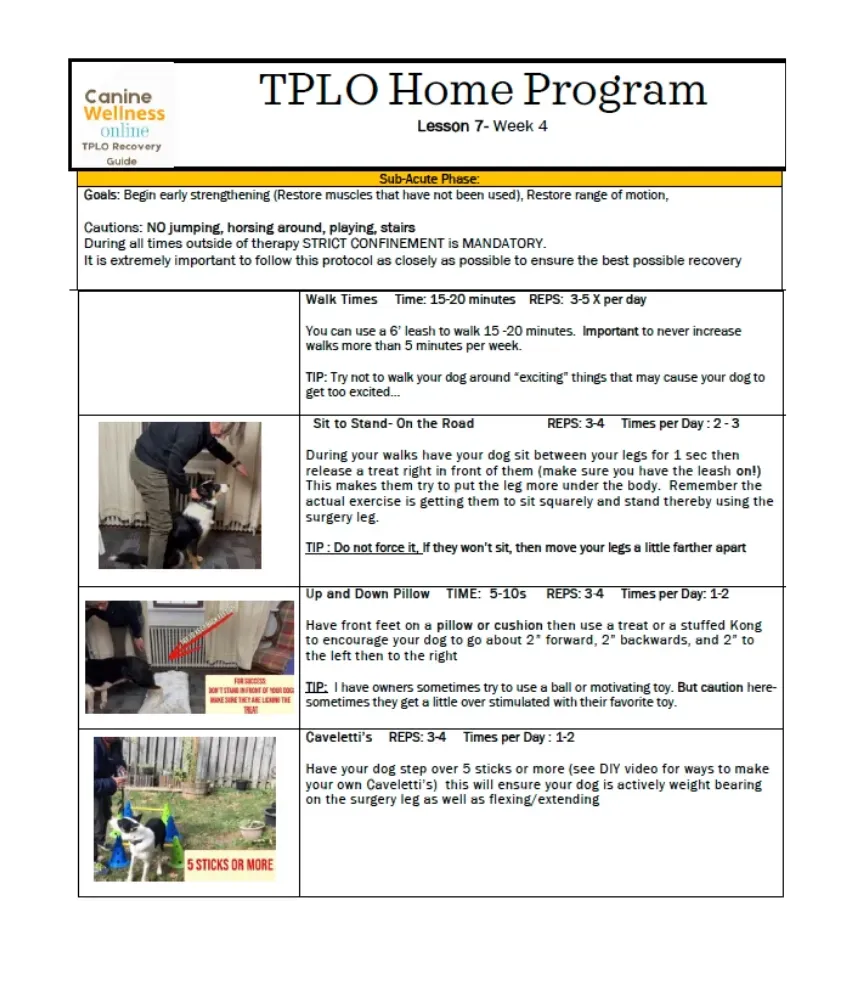
Pocket sheets — one per week
Printable, A5-sized reference cards for each week. Everything you need for that week's exercises and checkpoints, on one sheet. Keep it on the fridge, your phone, or in your dog's kit bag.
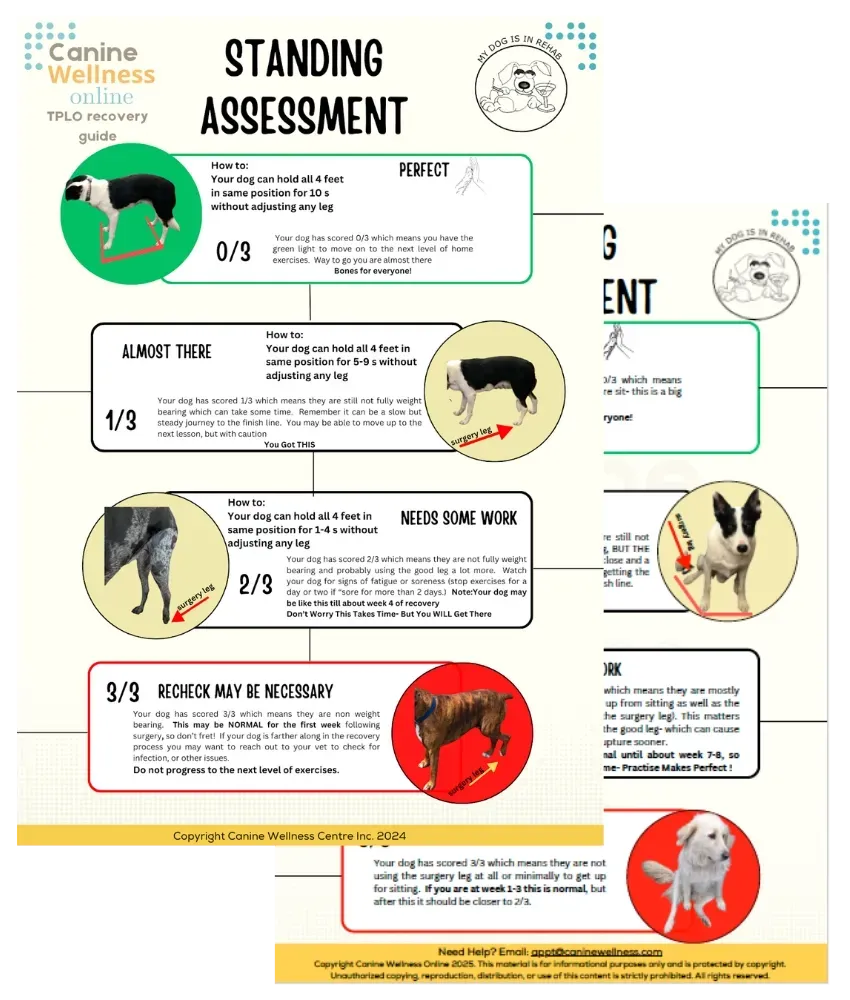
Weekly assessment tracking sheets
Structured observation prompts for monitoring swelling, weight-bearing, gait quality, and pain indicators. These give you a documented record to share with your vet at follow-up appointments.
🎥
Week-by-week video demonstrations
Every exercise is demonstrated on video so you can see exactly what correct technique looks like. No guesswork, no ambiguous written instructions — just clear, replicable demonstration for each week.
⚠️
Warning signs & red flags checklist
A clear, practical guide to the signs that warrant immediate veterinary contact versus those that are normal parts of the healing process. Owners who have this checklist report dramatically fewer panicked vet calls.
bonus module
🧠
Keeping the Lid On — mental enrichment during crate rest
Crate rest is mentally brutal for active dogs. This bonus module covers enrichment strategies that keep your dog calm and mentally stimulated without physical strain — games, puzzles, scent work, and more.
♾️
Lifetime access
One-time payment, no subscription, no expiry. Revisit any module whenever you need it. Share with your dog sitter, family members, or anyone else involved in your dog's recovery.
What owners say
From owners who've been through it
Frequently asked questions
Common questions about the Part 1 course
When should I enrol - before or after surgery?
You can enrol any time before or after surgery. If you haven't yet, start with the free TPLO Prep Guide — it covers everything you need to do before surgery day. The recovery course is designed to begin the moment you come home, so ideally enrol shortly before your surgery date so you're ready on day one.
Do I need any equipment to do the exercises?
No specialised equipment is required for the Week 1–2 exercises. As the programme progresses, some exercises may use simple household items (rolled towels, non-slip mats, a low step). Everything is designed to be achievable at home with minimal resources. Equipment recommendations are given in advance if anything specific is needed.
What is my recovery looks different from what the course describes?
Every dog's recovery is slightly different, and this course acknowledges that. The video content covers the most common variations and explains how to adapt exercises based on your dog's progress. If you have specific clinical concerns, a virtual consultation with Tania is available to give you personalised guidance for your dog's exact situation.
Does this replace veterinary follow-up appointments?
No — and this course doesn't suggest it does. TPLO recovery requires regular veterinary follow-up, including radiographs at specific milestones. What this course does is help you understand what your vet is looking for, prepare you for those appointments with documented observations, and give you clarity on what's happening between appointments.
My dog had surgery weeks ago and I'm already in recovery. Is it too late?
It's not too late. Many owners enrol mid-recovery when they realise they need better structure and guidance. The assessment sheets are valuable at any stage, and the Part 2 course (Weeks 5–8) may be your most relevant starting point if you're already past the first few weeks.
Should I get both Part 1 and Part 2?
If you're at the start of recovery (or pre-surgery), the bundle is the best value — $165 USD for both parts instead of $194 USD separately. Part 1 covers weeks 1–4 and Part 2 covers weeks 5–8. You'll need both to take your dog through the full 8-week recovery period with this programme.
Select your preferred option
Purchase the TPLO Recovery course
Pick the option that works for you — Part 1 only, or the complete bundle with both Parts 1 and 2 at the best price. Don't forget the saving, then click buy now to purchase and get instant access.
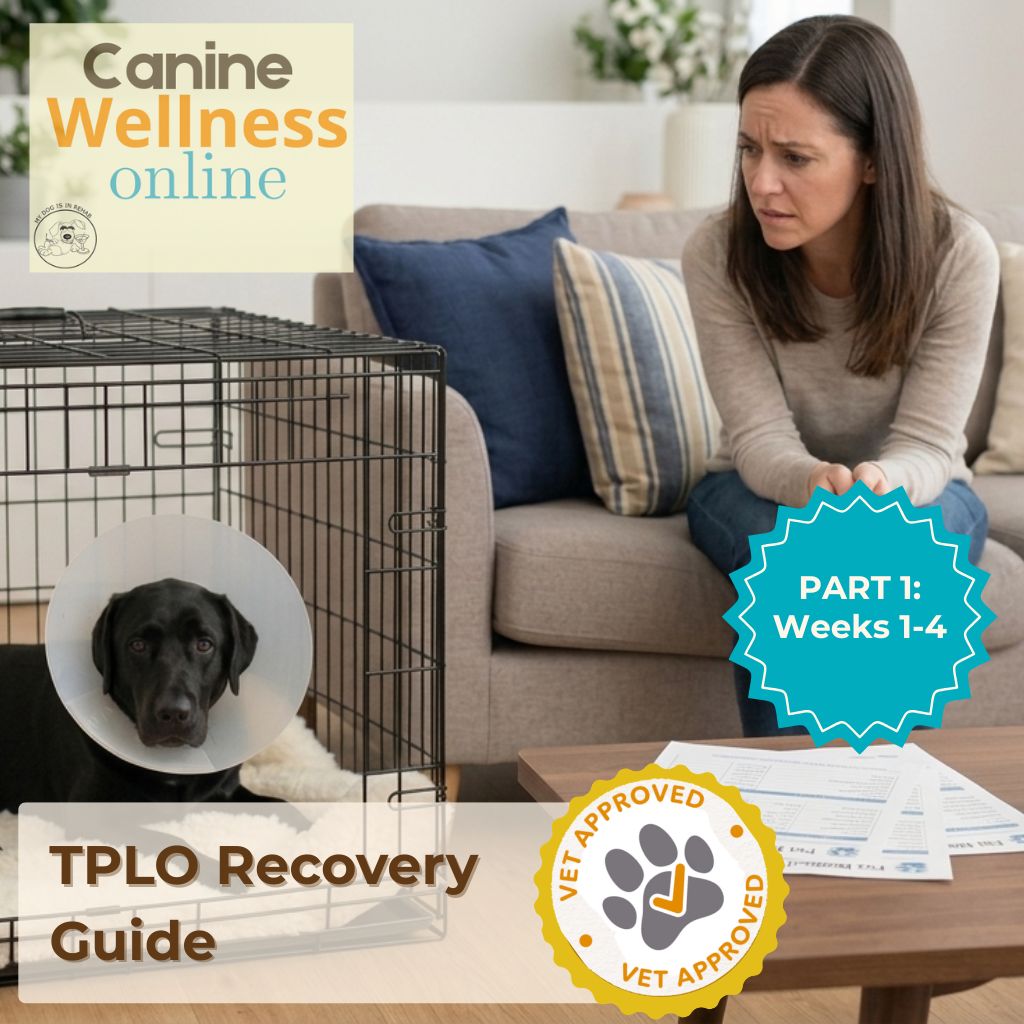

Don't stop at week 4.
Weeks 5–8 are when dogs regain strength, muscle mass, and return to normal activity. Get Part 2 now and have the complete roadmap ready before you need it.
Part 2 · Weeks 5–8
Rebuilding Strength & Return to Activity
Progressive rehabilitation — strengthening exercises, return-to-play protocols, and gait re-training through to full activity.
$97 USD
Or get both parts for $165 USD — save $29 on the bundle
stay informed
Free rehab tips, straight to your inbox
Get practical canine rehabilitation advice and be the first to hear about new courses, resources, and exclusive offers from Tania Costa.
No spam, ever. Unsubscribe any time.

Ontario's first small animal rehabilitation specialist. 20+ years of expert canine rehab, pain management, and wellness care. Founded 2003.


© 2026 Canine Wellness Centre Inc. All rights reserved.